Measuring and photographing before you book
Note length and width, fibre content if tagged, and any prior repairs. Photograph both faces, fringes, and problem corners. Those photos help the cleaner quote and protect you if condition is disputed later. Roll rugs face-in for transport unless instructed otherwise, and avoid tight rubber bands that crease foundation yarns.
Rugs on hardwood and radiant floors
Never leave a wet rug on hardwood. In-home cleaning needs waterproof protection under the work area and complete drying before the rug returns to the floor. Radiant heat can speed drying but also affect some backings—mention floor type when you book.
Antique vs decorative “oriental style”
Machine-made decorative rugs with oriental patterns are not the same as hand-knotted antiques. Prices, dye stability, and washing methods differ. If you inherited a piece and cannot tell, ask the cleaner to identify construction before washing. Paying specialist rates for a synthetic decorative rug—or bargain steam for a valuable Persian—both create regret.
Odour in padless rugs vs carpet with pad
Area rugs lack the thick pad sandwich of wall-to-wall, but they still hold urine in foundation yarns and latex backs. Enzymes and thorough rinse matter. Latex-backed synthetics can delaminate if over-wet or dried poorly—another reason controlled plant processes exist.
Seasonal timing
Spring dust season is a natural time to wash entry and living-room rugs that caught gravel grit all winter. Summer thunderstorms bring mud. Schedule around events if you need a specific rug back for holidays. Ask for realistic turnaround rather than rush promises that skip drying.
Area rug cleaning in Medicine Hat
Area rugs collect the same prairie dust as wall-to-wall carpet, plus fringe soil, pet accidents, and dining spills. Synthetic rugs and machine-made pieces often clean well in place. Handmade wool, oriental, and silk-blend rugs usually need a different process: dry dusting, controlled washing, and fast drying—ideally in a dedicated facility. This page helps you choose the right path and spot red flags.
Ask whether a rug can be cleaned in-home or needs off-site washing before you hand over a family piece.
In-home steam vs plant wash
In-home extraction can refresh sturdy synthetics and some sturdy wools when dyes are stable and construction tolerates moisture. Valuable antiques, silk blends, and rugs with unknown dyes are safer inspected and washed off-site. Matching method to fibre beats a one-size steam visit.
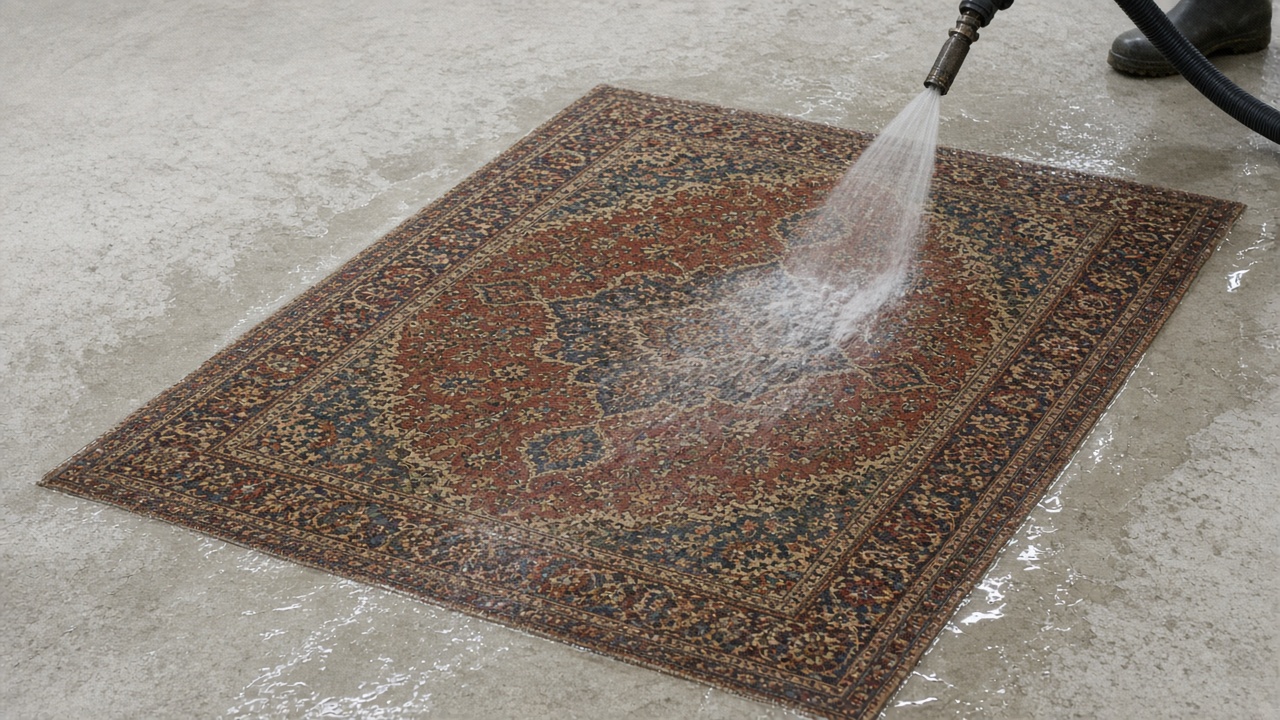
Why dusting comes first
Dry grit sits deep in the foundation. Washing without mechanical dusting can grind soil into mud inside the pile. Ordinary vacuums often compact dirt rather than remove it. Rug specialists use vibrating dusters or compressed air before any wet step—ask whether that step is included.
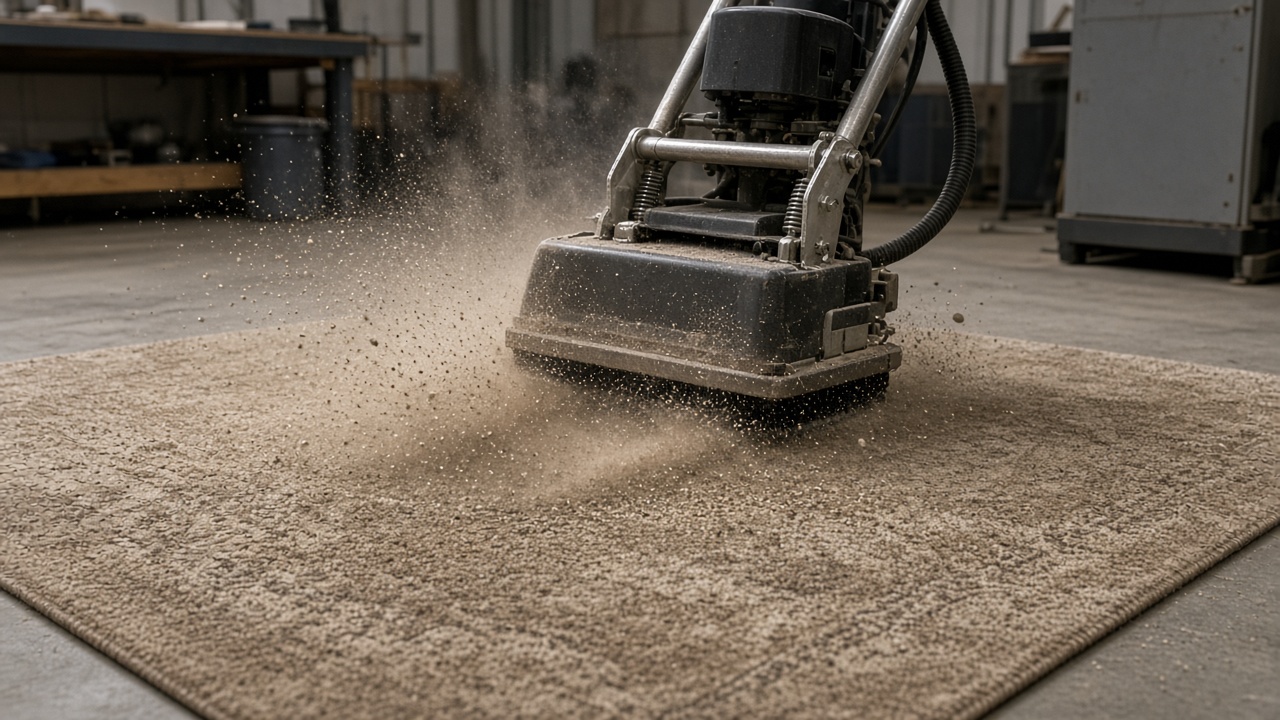
Drying and fringe caution
Fast forced-air drying from both sides, ideally under about twenty-four hours, reduces mildew risk in the foundation. Hanging a soaking-wet heavy rug can distort warp threads. Fringe bleach-by-default weakens cotton over time—ask how fringe is handled.
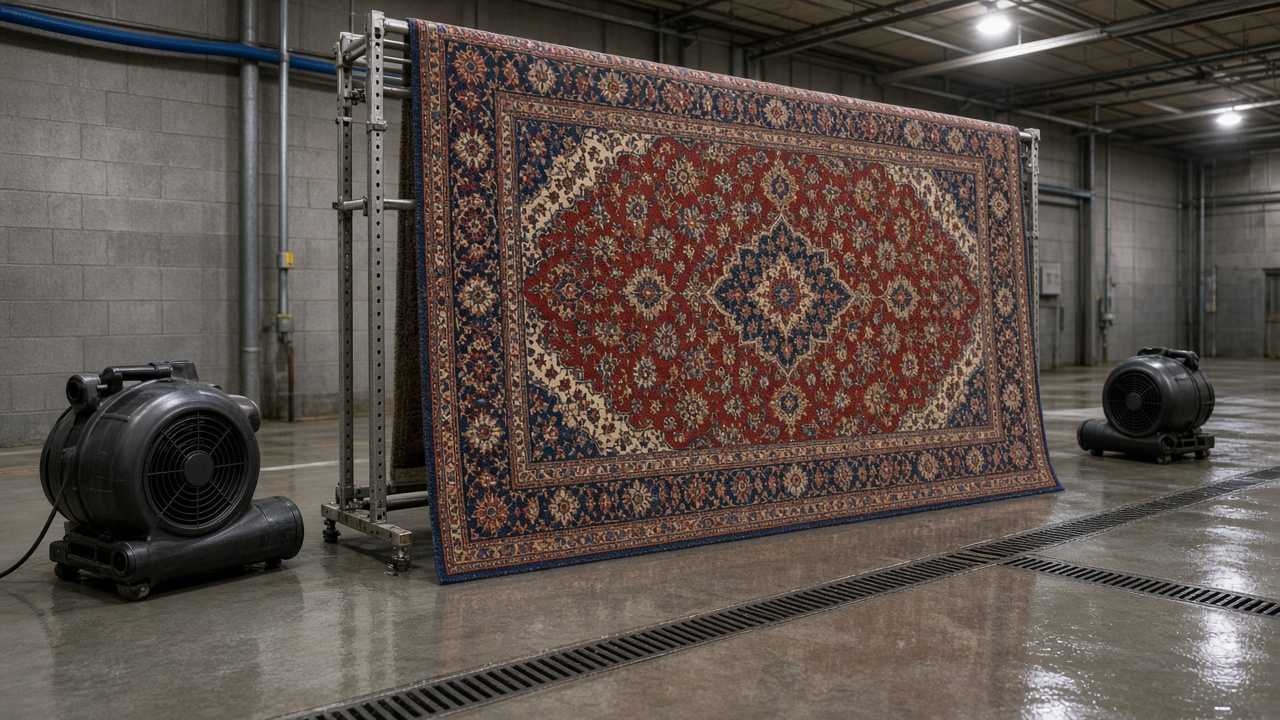
Red flags
- Flat quote without inspecting the rug
- In-place steam-only for delicate handmade pieces
- No drying plan or dedicated drying space
- No photo documentation at intake
- Automatic fringe bleaching
What changes a rug quote
Rug quotes depend on size, fibre, soil, fringe condition, dye stability, and whether washing is in-home or off-site. Whole-home carpet packages do not automatically include fine rugs—ask for a separate written quote after inspection.
Synthetic and washable rugs
Many studios wash synthetics and washable-style rugs with fibre-appropriate processes. Confirm latex backing, glue, and colourfastness before submersion. Some modern synthetic blues bleed when wet—testing matters.
Inherited or filthy wool rugs
Hose-on-the-roof DIY risks dye bleed and uneven drying. Bio hazards (rodents, heavy soil) push you toward professional washing even when the economic value of the rug is uncertain. Ask for an inspection opinion before you spend.
Combining rugs with sofas
Medicine Hat customers often want couches and rugs cleaned in the same week. Confirm pickup/delivery windows vs in-home scheduling. See upholstery cleaning for fabric-code details.
Call (403) 999-9999 with rug photos, approximate size, and fibre notes.
Pet accidents on area rugs
Rugs with rubber backs and washable constructions may tolerate different processes than hand-knotted wool. Urine in a wool foundation needs enzyme chemistry and thorough drying. If a rug sat rolled while wet, mildew risk rises—unwrap and air it and call promptly. Plant washing with controlled drying is often safer than flooding a wool rug on your hardwood.
Storage and moth risk
Clean wool rugs before long storage. Soil attracts pests. Ask whether moth treatment is included or optional, and store clean rugs in breathable wraps away from damp basements. Medicine Hat’s dry climate helps, but basements can still be humid enough for problems.
Colour runs and dye testing
Natural dyes and some synthetic blues can migrate when wet. A careful cleaner tests colourfastness on an inconspicuous corner or fringe area before a full wash. If a seller insists on washing without inspection, walk away—especially with inherited Persians.
Pickup, delivery, and turnaround
Off-site cleaning means scheduling pickup, wash time, and return. Ask for photo documentation at intake and a written condition note. Confirm whether furniture and wall-to-wall carpet can be scheduled around the rug’s absence so your rooms are not empty longer than needed.
Insurance and high-value pieces
For expensive rugs, ask how the cleaner insures pieces in transit and in plant. Get the answer in writing.
How Medicine Hat dust shows up on rugs
Entry rugs take the first hit of gravel fines. Living-room rugs collect the slower rain of airborne dust that locals describe on buses and windowsills. Dining rugs see food soils. Each use pattern suggests a different cleaning interval. Entry rugs may need more frequent attention through spring; fine wool showpieces may need careful annual or biannual plant washes instead of constant DIY shampooing.
Rotate rugs periodically so sun fade and traffic wear distribute more evenly. Padding under rugs protects both the rug and the floor—replace crumbling pads that shed crumbs into the foundation.
Talking to a specialist vs a carpet generalist
Some carpet cleaners thoughtfully clean synthetic area rugs in place. Fewer operate true rug plants with dusting equipment and controlled drying. For a costly handmade piece, ask for facility photos, process steps, and references. Association directories for rug care specialists exist in the wider industry—use them as research starting points even if local membership is thin.
Insurance claims and documented damage
If a rug was damaged in a flood or by a tenant, document before cleaning. Cleaning may be required by an insurer, but it can also reveal pre-existing wear. Photo diaries protect you.
Simple care between professional washes
- Vacuum both faces periodically when practical
- Blot spills immediately; avoid soaking the foundation
- Keep rubber-backed rugs from sitting wet on hardwood
- Lift and air rugs after Chinook mud events
Those habits stretch the time between plant visits without pretending DIY replaces professional washing for wool and oriental pieces.
Extended intake checklist for valuable rugs
Before release, agree on: fibre identification, known prior damage, fringe condition, colourfastness test results, wash method, drying method, turnaround date, price, and photo documentation. Get exceptions in writing—moth repairs, dye bleeding risk, and shrinkage possibilities should not be surprises on pickup day.
Ask whether all work is in-house or subcontracted. Subcontracting is not automatically bad, but you deserve to know who handles the rug and where it sits overnight. Visit the facility when possible; clean, organized drying rooms inspire more confidence than vague promises.
Flatweaves, kilims, and dhurrie care
Flatweaves lack deep pile but still hold soil in the weave. They can distort if hung wet. Ask specifically how flatweaves are supported during wash and dry. Some respond well to careful in-home cleaning; others still benefit from controlled washing. Construction details beat generic “rug cleaning” labels.
Synthetic outdoor and porch rugs
Outdoor rugs see Medicine Hat UV, dust, and thunderstorms. Many are polypropylene and tolerate hose rinsing, but check manufacturer guidance. Mildew on damp backs after rain needs full drying before the rug returns to a deck. Professional cleaning helps when ground-in grit remains after DIY rinses.
Closing guidance
Choose process over price alone for anything handmade or sentimental. Choose clear logistics for synthetics you simply want fresh. Call (403) 999-9999 with measurements and photos so the conversation starts with facts.
One more note on expectations
Area rug cleaning rewards patience: inspection, dusting, washing, and drying each protect the piece. Rushing any step to hit a same-day promise is how fringe damage and mildew happen. Plan the calendar around the rug you care about, and call (403) 999-9999 with sizes and photos so logistics start clear.
If your household only has inexpensive synthetic rugs, in-home cleaning paired with a carpet visit may be enough. If you own handmade wool, spend the extra words asking about dusting machines and drying rooms before you say yes.
Finally, remember that fringe condition, dye stability, and foundation integrity matter as much as surface soil. A rug that looks only “a little dirty” can still hide grit that abrades fibres every time you walk across it. Professional dusting addresses that hidden wear. Share any prior water damage history when you enquire so the cleaner can plan drying capacity and avoid surprises after the wash.
Call (403) 999-9999 when you are ready to schedule inspection or in-home synthetic cleaning for Medicine Hat rugs.
Ask about written pricing and turnaround before the rug leaves your home.
Area rug cleaning FAQs
What should I look for in a rug cleaning company for an old Persian or oriental rug?
Prefer specialists who inspect first, dust before washing, photo-document, price in writing, and dry quickly with forced air — not a confidence-only Facebook cleaner. Ask if work is in-house.
Send the rug out or steam it at home?
Synthetics and sturdy wools are sometimes cleaned in place; valuable antiques and silk blends are often safer in a wash facility. Match method to fibre and dye stability.
Why is dusting before washing so important?
Dry grit sits in the foundation; washing without mechanical dusting can grind soil and leave mud in the pile. Vacuums alone often compact dirt deeper.
How should rugs be dried?
Fast, controlled drying (ideally both sides, under about 24 hours) reduces mildew risk; hanging a soaking-wet rug can distort foundations.
What are red flags when hiring a rug cleaner?
No inspection before quoting, in-place steam-only for delicate handmade pieces, no drying plan, and bleach-by-default on fringe.
How much does a roughly 7×10 rug cleaning cost?
Rug quotes depend on size, fibre, soil, fringe condition, and whether washing is in-home or off-site. Ask for a written quote after inspection.
Can synthetic washable rugs go in a plant wash?
Many studios wash synthetics and washable-style rugs with fibre-appropriate processes. Confirm construction (glue, latex backing) before submersion.
My inherited wool rug is filthy — DIY hose on the roof or professional wash?
Professionals generally recommend professional washing for wool, especially with bio hazards or unknown dyes; DIY hose cleaning risks bleed and uneven drying.
Do blue synthetic dyes bleed?
Some modern synthetic blues are bleed-prone when wet. A careful cleaner tests colourfastness before a full wash.
Can Medicine Hat cleaners take rugs and do sofas the same week?
Local demand is often for combined soft-surface cleans. Confirm pickup and delivery vs in-home and turnaround. Confirm pickup, delivery, and turnaround when you request a quote.